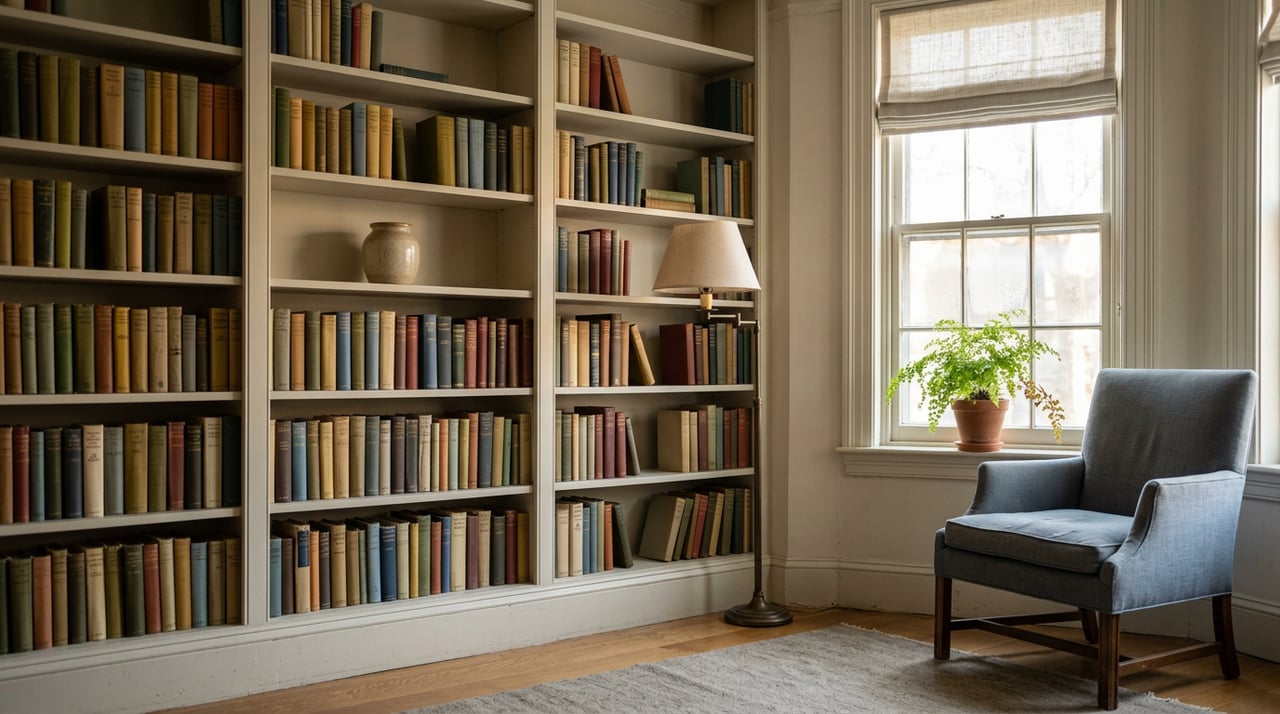
Southeast Library Reopening in Capitol Hill: What Changed
July 23, 2026
July 23, 2026
The neighborhood's most-used civic building has been dark since the first week of January 2024. On September 10, 2026, it opens again. What returns is not the library that closed. It is a building that grew downward rather than outward, chose a new door on a side street to solve a problem the front stoop could not, and rearranged its interior around a demand the community named repeatedly in public meetings: more room for kids.
If you have lived on the Hill long enough to remember taking a stroller up the original front steps, the thesis of this reopening is simple. The Carnegie shell you know is intact. Almost everything inside it is not.
The Southeast Library sits at 403 7th St. SE on an irregularly shaped site in the Capitol Hill National Register District, purchased with $8,360 from Congress and bolstered by $67,000 in construction funding from the Carnegie Corporation. It opened on Dec. 8, 1922 as the second neighborhood library built in the DC system and has been one of the busiest branches since. The one-story brick building was designed by Edward Lippincott Tilton in the neoclassical style, and is one of three Carnegie libraries in Washington. It was listed on the National Register of Historic Places in 2021.
The modernization is a $33 million project by the design-build team of Whiting-Turner Construction and Quinn Evans Architects. The work was reviewed along the way by the ANC, the DC Historic Preservation Review Board, the U.S. Commission of Fine Arts and the Capitol Hill Restoration Society, which is why the exterior you'll walk up to on opening day will feel more restored than reinvented.
The headline number is easy to misread. It did not fund a bigger footprint on 7th Street. It funded a floor that did not exist before, tucked under the building.
Here is what the money bought, in the terms the library itself has described:
Read those five items together and you can see the priority the community pushed for. The library hosted eight community meetings during the design process, and conducted a survey and focus groups to gather input. HillRag's July 8 write-up put it plainly: children are major beneficiaries of the design, a desire indicated by the community in feedback.
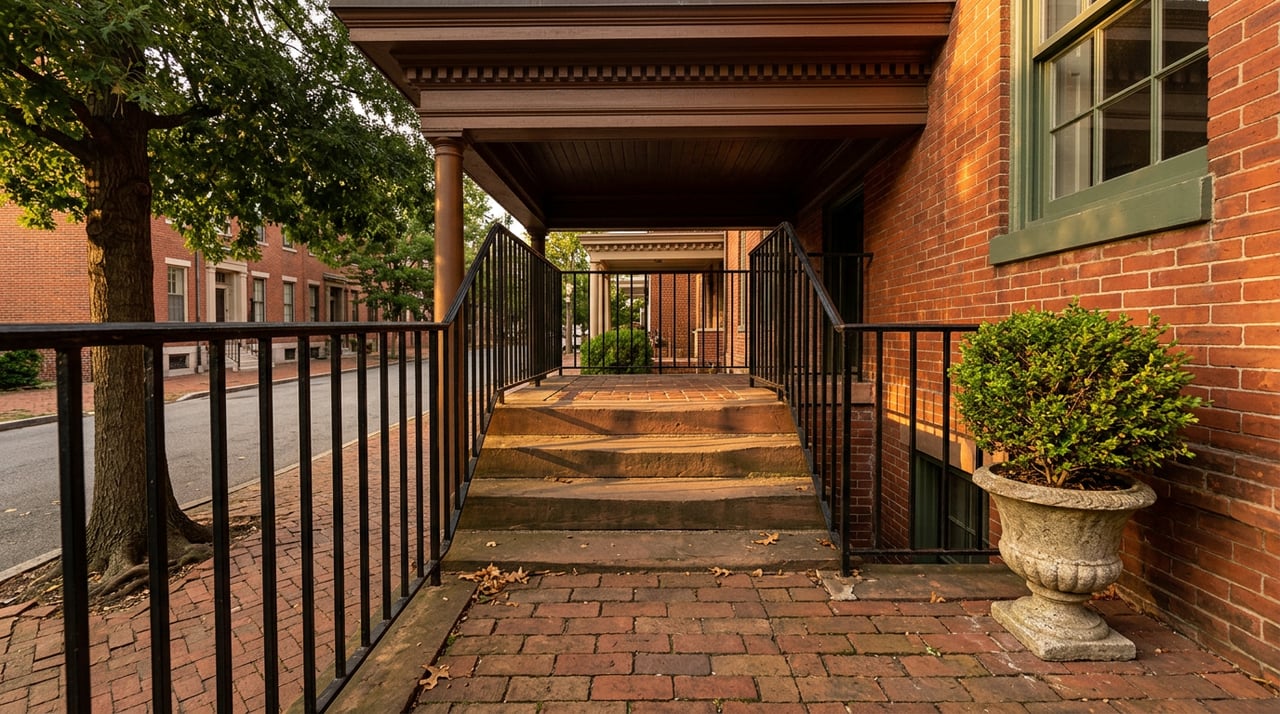
Anyone who has tried to get a stroller, a wheelchair, or a walker up the original front steps knows the accessibility problem the original 1922 building presented. The new plan solves it without touching the historic face on 7th Street. Instead, the design routes universal access through the side.
The universal entrance is through a new tower addition, which links the library to the neighboring townhouse and houses the interior stairs, elevator, and washroom facilities. That's the piece that got the sharpest scrutiny during design review, and the piece that will feel most new to longtime patrons on opening morning. The historic entrance stays. The everyday entrance for many patrons will be the one on South Carolina Avenue SE.
For a neighborhood whose housing stock still forces daily negotiations with stoops, iron railings, and half-flight parlor floors, a Carnegie branch that finally answers its own accessibility question is not a small thing.
The closure was long, and the interim was thin by design. From January 2024 onward, the interim library during the construction period has been the Northeast Library at 330 7th Street NE, roughly a mile away. Closer to the closed branch, the Arthur Capper Community Center at 1000 5th Street SE hosted a TechExpress with Wi-Fi access, computers, printers, and the ability to pick up reserved books and return books, though no browse-able collection.
That express location is about to close for the handoff. Per ANC6B Commissioner David Sobelsohn's note to the SE Library Taskforce, Arthur Capper TechExpress will close on Friday, July 31 so equipment and technology can be moved into the renovated building ahead of its reopening. He added that the goal is to keep minimal services through August at Arthur Capper, especially the holds bookcase and the return bin.
If you have been picking up holds at Capper, mark July 31. If you have been driving to Northeast on 7th Street NE, that trip stops mattering the second week of September.
A few practical notes worth carrying into opening day.
The address has not moved. It is still 403 7th Street SE. The historic Tilton entrance on 7th Street is still there. But if you are pushing a stroller, using a mobility device, or moving with a group, the South Carolina Avenue SE entrance is now the front door in every practical sense. Interior circulation, restrooms, and the elevator run through the new tower addition rather than through the historic core.
The children's collection has moved down, not up. Story time, kids' computers, and family activity space are on the new lower level, which is why the excavation happened at all. The adult reading room and the flexible community meeting space sit on the main floor. Expect the skylight and the central light well to do the work of orienting you between floors, since that daylight column runs the full height of the building through what used to be a stairwell.
Standard DCPL hours apply. The system's branches are generally open Monday through Saturday from 10:00 a.m. to 6:00 p.m., with the specific Southeast schedule to be confirmed at reopening.
For the reader deciding whether this matters to daily life: the Southeast Library was one of the busiest branches in the DC system before it closed. WTOP, in its coverage of the shutdown, noted concern in the Capitol Hill neighborhood for patrons of a library that has been one of the DC Public Library system's busiest since it opened in 1922. Twenty months of that demand has been rerouted elsewhere. On September 10, it comes home. Expect the first few weeks to feel full.
The building you'll walk into will look like the one Andrew Carnegie helped pay for a century ago. What's changed is underneath, beside, and above it, and it changed because the neighborhood asked for the changes out loud, over eight community meetings, for the better part of a decade.
If you are thinking about a move on the Hill, or wondering how a specific block sits relative to its everyday civic anchors — libraries, markets, schools within walking distance — that block-by-block context is what we do. Reach out to Don Denton and let's connect.
Discover a real estate experience defined by trust, expertise, and heartfelt dedication. Donald's lifelong understanding of what “home” truly means guides every client and every decision.